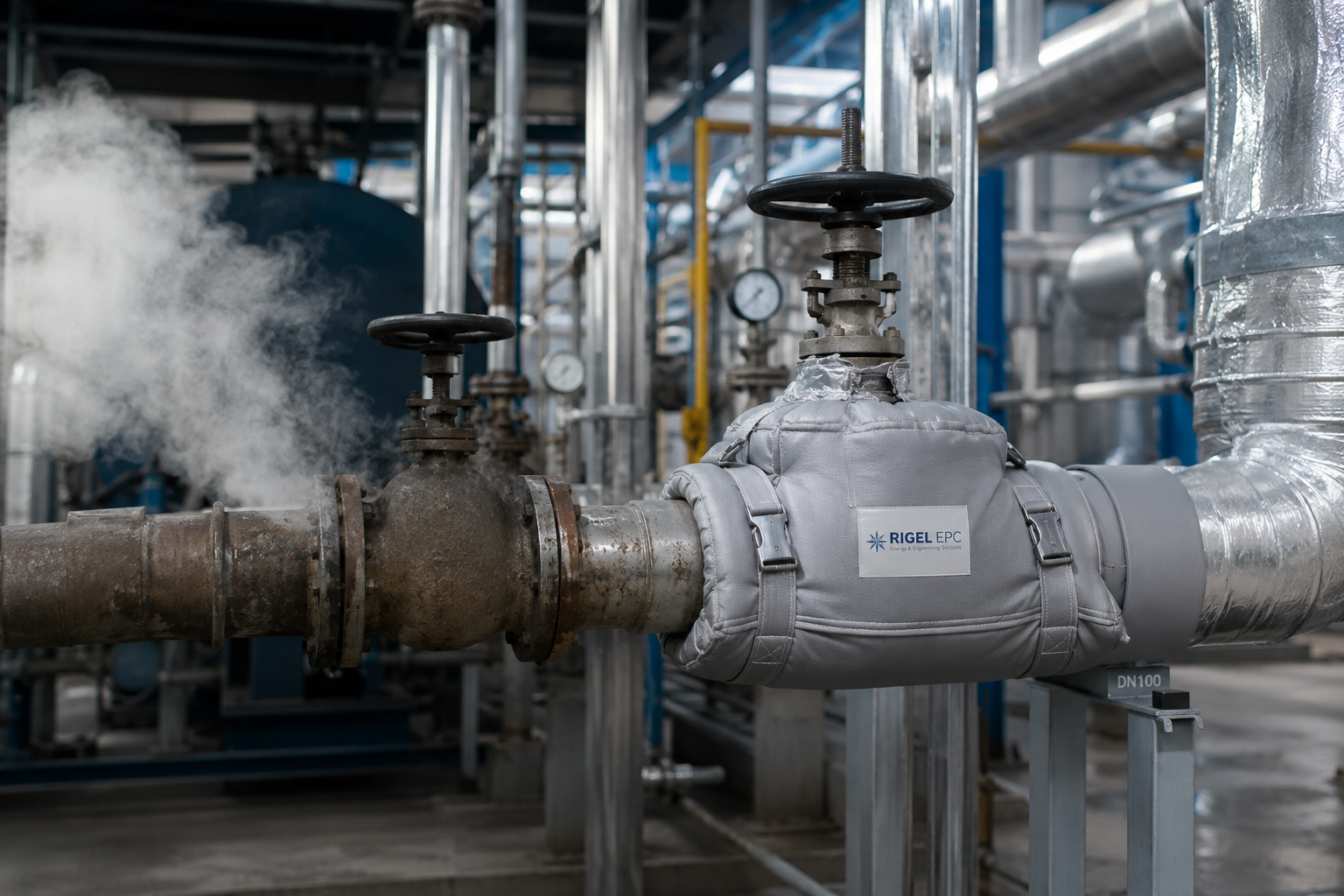

Energy Savings and Thermal Insulation Standards in Steam Lines | Rigel EPC
13 July 2026
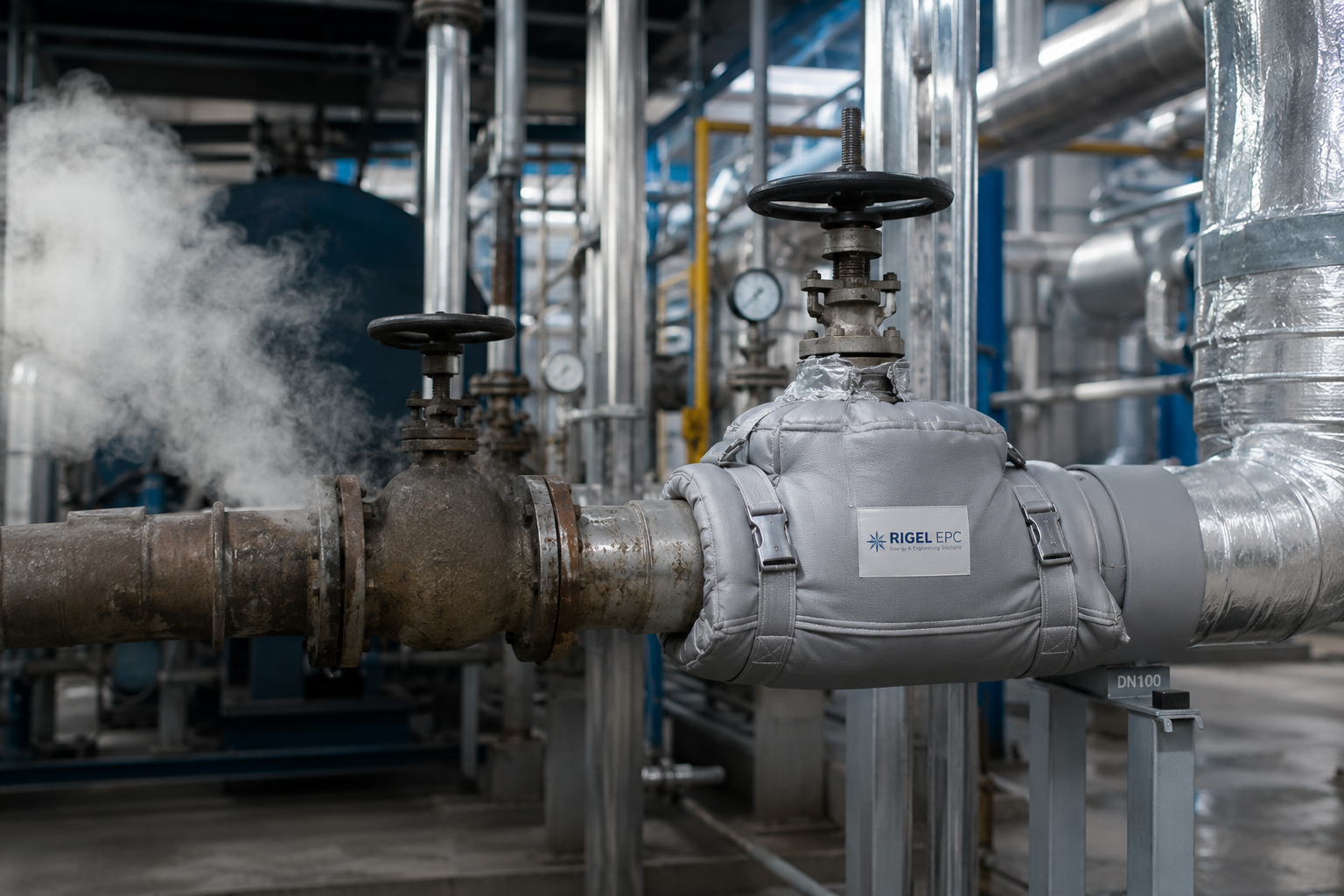
Transporting energy generated in industrial plants to processes in the most efficient manner is the primary step toward reducing operational costs and optimizing overall plant efficiency. Steam, the indispensable working fluid of industry due to its high heat-carrying capacity, causes severe energy and fuel losses when not properly insulated.
As the Rigel EPC Engineering team, in this first issue of our weekly technical content series, we examine the critical importance of thermal insulation in steam lines, international insulation standards, and the exact energy load that uninsulated equipment places on your facility.
How Does Heat Loss Occur in Steam Lines and Why Is It Dangerous?
Saturated or superheated steam generated in boilers loses heat continuously to the colder surrounding air as it flows through pipelines. When pipes, valves, flanges, and steam traps remain uninsulated, heat loss occurs through two main physical mechanisms:
- Convective Heat Loss: Air contacting the hot metal surfaces warms up, expands, rises, and is replaced by cooler ambient air, creating an uninterrupted heat loss loop.
- Radiant Heat Loss: High-temperature metal surfaces emit thermal radiation directly into the surrounding environment via electromagnetic waves.
The heat lost from bare surfaces causes steam to condense prematurely into condensate. Excess condensate lowers heat transfer efficiency and triggers destructive physical impacts known as water hammer, which can severely damage piping networks and control valves.
International Thermal Insulation Standards for Steam Lines
Selecting appropriate insulation materials and thickness requires compliance with internationally recognized engineering standards:
- TS EN ISO 12241: Thermal insulation calculation rules for building equipment and industrial installations, establishing surface temperature limits.
- ASTM C680 / ASTM C1129: Standard practices for determination of heat gain or loss and surface temperatures of insulated pipe and equipment systems.
Industrial Insulation Materials and Removable Valve Jackets
- Rockwool (Mineral Wool): The primary insulation choice for steam lines due to its high temperature resistance (up to 650°C), Class A1 non-combustibility, and low thermal conductivity.
- Removable Valve Insulation Jackets: Custom-tailored, flexible, high-temperature resistant jackets designed for complex equipment like valves, strainers, and flanges that require periodic maintenance access.
📊 Concrete Savings Calculation: Annual Energy Load of an Uninsulated Valve
A single uninsulated valve dissipates as much heat as several meters of bare pipe. Key technical performance metrics:
- Valve Type & Size: DN 100 (4") Globe Valve
- Steam Condition: 165°C (~6 bar)
- Annual Operating Hours: 6,000 hours/year
- Bare Valve Heat Loss: ~4,600 kWh / year (~450 m³ Natural Gas)
- Insulation Efficiency: 90% Heat Loss Reduction
- Net Annual Savings Per Valve: ~4,140 kWh / year (~405 m³ Natural Gas)
- Environmental Impact: ~1 ton CO₂ / year prevented
- Payback Period (ROI): 3 - 6 Months
Engineering Support for Efficient Operations
Accurate engineering calculations are essential to minimize heat losses and maximize process safety. With our Rigel EPCal Engineering Calculator developed by Rigel EPC, you can instantly verify steam properties, pipe sizing, and pressure drop parameters.
Images